So what happens when you make an ATM transaction? What kind of security procedures are in place when your customers make transactions at your establishment? It’s important that your customers feel like the transactions they make are secure, because this leads to their trusting your establishment more firmly. And of course, by knowing what it is exactly that ATMs do, you will be able to assuage any possible fear your customers might have, even though nowadays ATMs are one of the most implicitly trusted machines that people deal with.
A transaction is started when a customer inserts his or her ATM card into the machine. A magnetic strip reader interprets the magnetic strip on their card as their ATM card number. (It is also possible for the machine to read your name and expiration date off the card, as well as some other nominal data, however the ATM does not need these things to operate.) The ATM takes this information and begins communicating with the transaction server.
Before any communication can take place, however, the established connection must be securely encrypted. All of the machines operated by Capital ATM are fully compliant with standard Triple DES encryption and encrypted keypads, to ensure that your customers’ data is safe.
After the ATM has established a connection with a regulated financial systems server, it takes the input you give it via the keypad, and asks the financial server to do the things you’ve asked. The financial server then talks to your bank’s servers, and makes sure that all the funds are properly debited, if available. The ATM then charges you a nominal fee, part of which goes to the credit institution who handled the transaction, most of which goes to Capital ATM. This is how Capital ATM makes its profits.
When you leave, the ATM ceases all communication with the server, and most of the details of the transaction are forgotten forever, so that your card number, pin number, and bank routing information can never be gleaned from your transaction after you have completed it.
These are the very basics of how ATMs communicate with financial institutions to do the job of giving your customers their money.
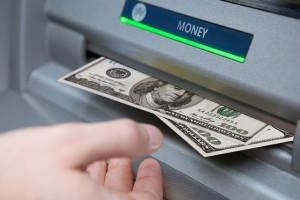
An ATM transaction showing a person receiving their hard-earned money from a safe and secure ATM.